KYLER RUSSELL

Computer Science & ML Researcher.

CS Junior, University of Kansas — Class of 2027 · Lenexa, Kansas

now active: [CTM] tick-count & LR-sweep studies [Brain] developmental language curriculum [Quant] Qwen3.6-27B → TQ1_64

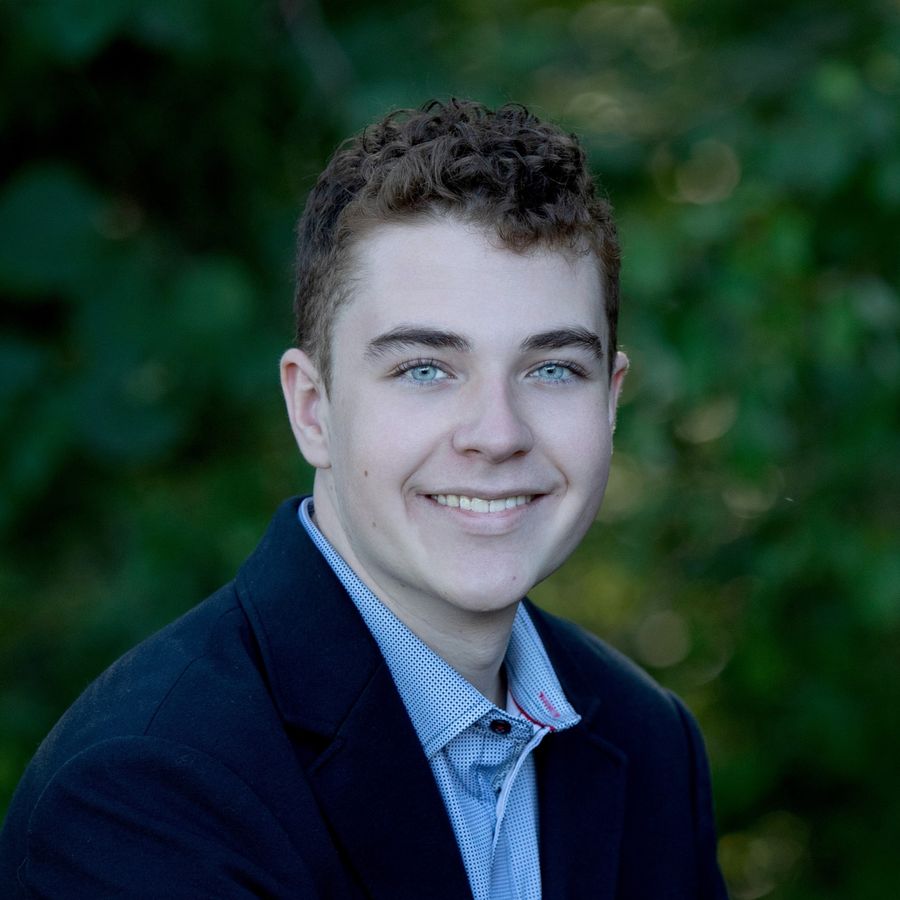
Portrait of Kyler Russell

01

Research

Three questions about how computation is carried out — in recurrent time, in biological circuits, and in discrete silicon. All run solo, hypothesis-first with paired controls, on a self-built 2× RTX 3090 server; negative results get written up as carefully as positive ones.

01 / Recurrent computation

Continuous Thought Machine LMs

CTM-Transformer · Apr 2026 – present

Finding

16-tick CTM beats its matched 1-tick control by 0.157 nats @ 400M tokens — pre-registered, FLOP-matched

Does temporal synchronization (CTM, arXiv:2505.05522) improve recurrent computation in language models beyond what recurrent depth alone provides (arXiv:2502.05171)? Tested against standard and recurrent-depth Transformers on identical data.

  • Pre-registered plan: FLOP- and token-matched comparisons, 2×2 mechanism ablations, paired-bootstrap statistics, go/no-go gates
  • Cross-position ticks add 18.6 points on a synthetic word-problem task; tick-count controls show no gain at 100M tokens
  • Code audit caught silent bugs — permutation-invariant token attention, unwired config flags, eval tokenization errors

02 / Biological computation

Living Brain

Living-Brain · Jan 2026 – present

Finding

Cerebellar module passes a 26-benchmark neurobiology suite — eyeblink, VOR, saccades, interval timing

A biologically grounded neural engine: GPU predictive coding over thousands of model neurons on hierarchical modular graphs, with NMDA/AMPA dynamics, shunting inhibition, interneuron subtypes, and short- and long-term plasticity.

  • Cerebellar forward/inverse models alongside the classic conditioning and adaptation benchmarks
  • Developmental language curriculum — holophrases → slot-and-frame → complex constructions — reaching mid-90s accuracy on stage one
  • Experiments distributed across the home cluster with Ray

03 / Discrete computation

Ternary LLM quantization

Model-to-Ternary · May 2026 – present

Finding

1.78 bits / weight · 82.1% held-out token agreement · closed-form Gram solve cuts compute 20–30×

Compressing Qwen3.6-27B — a 64-layer hybrid Gated-DeltaNet / attention model — to {−1, 0, +1} weights that run natively in llama.cpp: rotation → calibration → block-wise reconstruction → latent assignment training → distillation → GGUF.

  • Designed TQ1_64, a self-contained ternary format with a bit-exact reference encoder; 64-weight scale groups beat stock 256-weight formats (79.3% → 82.1%)
  • Surveyed 13 sub-2-bit format families: reconstruction error predicts perplexity at r = 0.996 — including where my own format was Pareto-dominated
  • Traced 3.5–4× slowdowns to CPU-optimizer serialization; fixed with a fused multi-threaded Adam and pinned async H2D ring buffers

02

Personal projects

AlphaSlayer — A two-network RL agent for Slay the Spire 2 · 2026 · [GitHub ↗]

Finding

Scripted heuristics out-reached the trained net on bosses → the bottleneck was run policy, not combat

Slay the Spire is two problems stacked: winning each fight, and steering a whole run so you arrive at the boss with a deck and HP that can win. AlphaSlayer splits them into a fast tactical network and a larger strategic one, both Transformer encoders over set-tokenized game state.

  1. Observation

    Hand-written heuristics beat the trained agent on boss-reach rate.

  2. Diagnosis

    Combat skill wasn't the ceiling — HP and deck management before bosses was.

  3. Rebuild

    Training reworked around Generalized Advantage Estimation and paired-seed evaluation.

  • Reinforcement learning
  • PyTorch
  • Transformers
  • GAE

Home Kubernetes clusterOct 2025 – present

A bare-metal Talos Linux cluster managed entirely from Git with Argo CD, running 20+ services and the GPU workloads behind my research.

Hardware
Self-built server · 2× RTX 3090 (24 GB) · ~629 GB RAM
Cluster
Bare-metal Talos Linux Kubernetes
Delivery
Argo CD app-of-apps · self-healing sync · Kustomize
Services
Harbor · Prometheus / Grafana · Longhorn · MetalLB · Ingress-NGINX · Sealed Secrets · Coder · Nextcloud
GPU
NVIDIA device plugin → Ollama, GPU-backed remote dev desktops
ML jobs
Ray training images built and pushed by GitHub Actions
Access
Tailscale VPN-only · firewall rules · access controls
Log
278 commits since Oct 2025

Linux desktop environmentJun 2026

A modular, zero-rounding "tactical" desktop for virtualized machines — flat, dense and grid-based — deployed and kept in sync with one command.

Window manager
Hyprland — keymaps, rigid window rules, sharp-border theme
Terminal
Kitty
Status bar
Waybar system telemetry, monospace styling
Launcher
Rofi
HUD
Custom Python telemetry overlay
Deploy
install.sh / update.sh — one-command setup and sync

03

Work

04

Experience

  • B.S. Computer Science University of Kansas — 2024 – 2027Junior · expected May 2027. Coursework: Artificial Intelligence, Deep Learning, Databases.
  • Study abroad, Computer Science Korea University, Seoul — Fall 2025
  • Independent ML Researcher & Home Lab Administrator Self-directed — 2023 – presentDesign, build and run the compute and software stack behind my research — a multi-GPU Linux server, a Kubernetes cluster and VPN-only networked services — with every experiment logged as hypothesis, controls and outcome.
  • Co-founder & Co-CEO ComfyCup LLC — 2016 – presentCo-invented a consumer product and scaled it to 100,000+ units sold worldwide.
  • Networking Specialist & Club President CyberPatriot — 2021 – 2024Placed 5th nationally out of 5,266 teams in the national youth cyber-defense competition.
  • Programming Team Leader FIRST Tech Challenge — 2022 – 2023Led Java robot software — autonomous image detection, driver assist, real-time sensor integration — plus source control and code review.
  • Honors Eagle Scout (BSA Troop 587) · German Silver Seal of Biliteracy (2024)

05

Contact

Open to research collaborations, internships and interesting problems.